Before the visit
If there is active leakage, stop using the affected ice-making function and arrange service. Use an accessible shutoff only when it can be operated safely. Do not bypass switches or disturb electrical and water connections.
Clear a safe working area, keep any displayed message and mention custom panels or restricted access. Do not dismantle the appliance in preparation.
What you may be noticing
An intermittent fault needs a short timeline. Note when normal operation returns, what happens just before the interruption and whether a message appears. Do not recreate an unsafe condition to capture it.
- Small or hollow ice pieces.
- Water appearing around the ice-making area.
- A repeated fill or harvest noise.
- Ice production stopping intermittently.
- Little or no new ice.
When a problem comes and goes
No ice, slow production and a water leak are different service requests. Say whether the appliance still cools, whether water dispensing changed, and whether the problem is continuous.
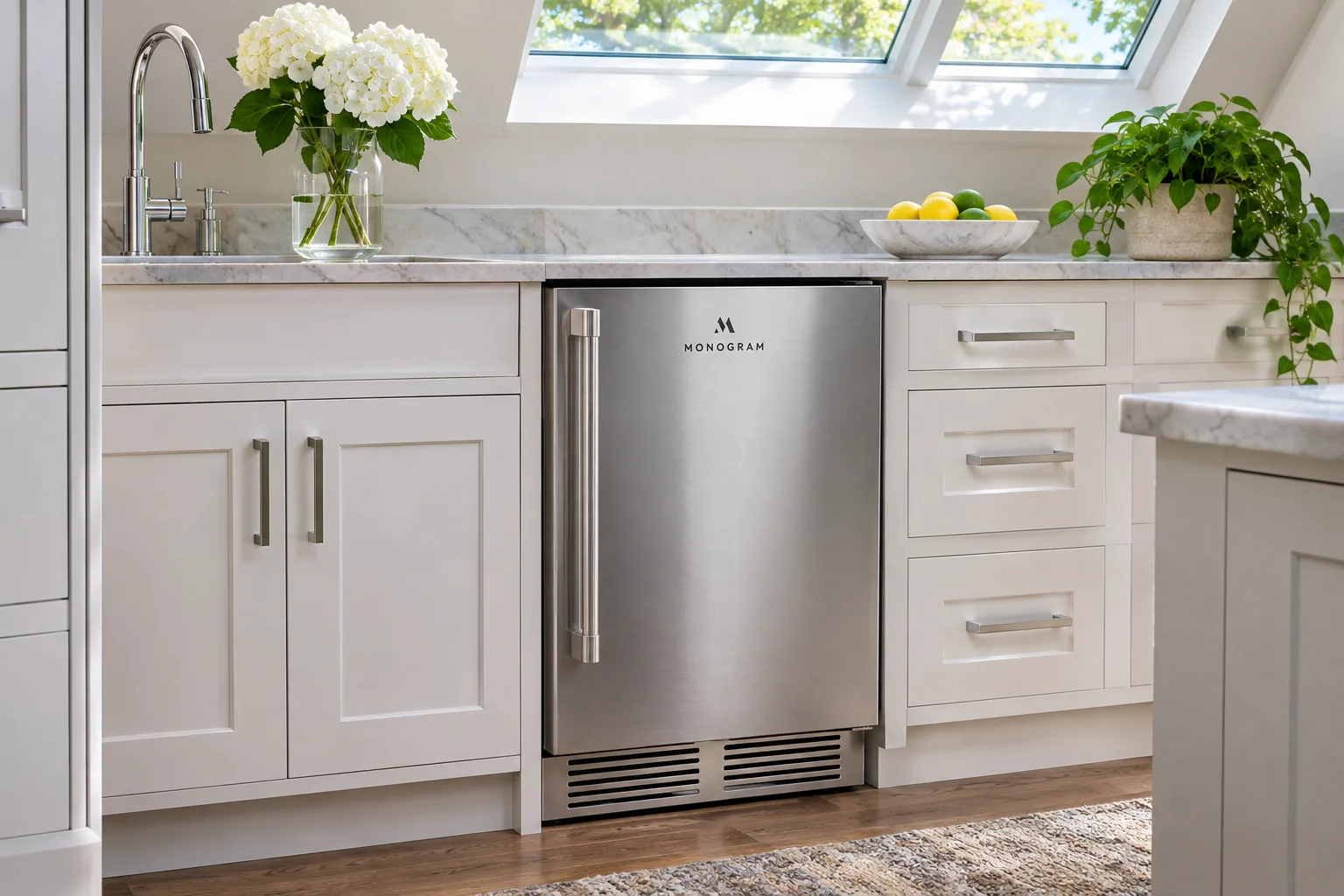
Identify the Monogram appliance and any separate zones, cooking modes or cycle stages involved. Include whether the equipment is built in and whether access is restricted.
Diagnosis, approval and repair
The diagnostic/service call is $149, credited toward an approved repair. After diagnosis, you receive an itemized repair quote before work begins. Genuine OEM parts are used.
Availability, including same-day or emergency requests, depends on the address and schedule. Sending a request does not reserve an appointment.
The 1-Year Parts & Labor Warranty covers parts installed and labor performed under normal use. It excludes new unrelated faults, misuse, power surges and work performed by others after the visit.
Sealed-system and refrigerant work is performed by an EPA-certified technician. Manufacturer names identify equipment serviced; this is independent service.
What the inspection needs to establish
The technician adapts the inspection to the installation and reported behavior. These are areas to evaluate, not a list of parts to replace.
- Identify the ice-making arrangement and reported production pattern.
- Check the relevant water supply, inlet and accessible connections.
- Evaluate fill, freezing and harvest operation as applicable.
- Trace leaks and test the sensors or controls indicated by the findings.